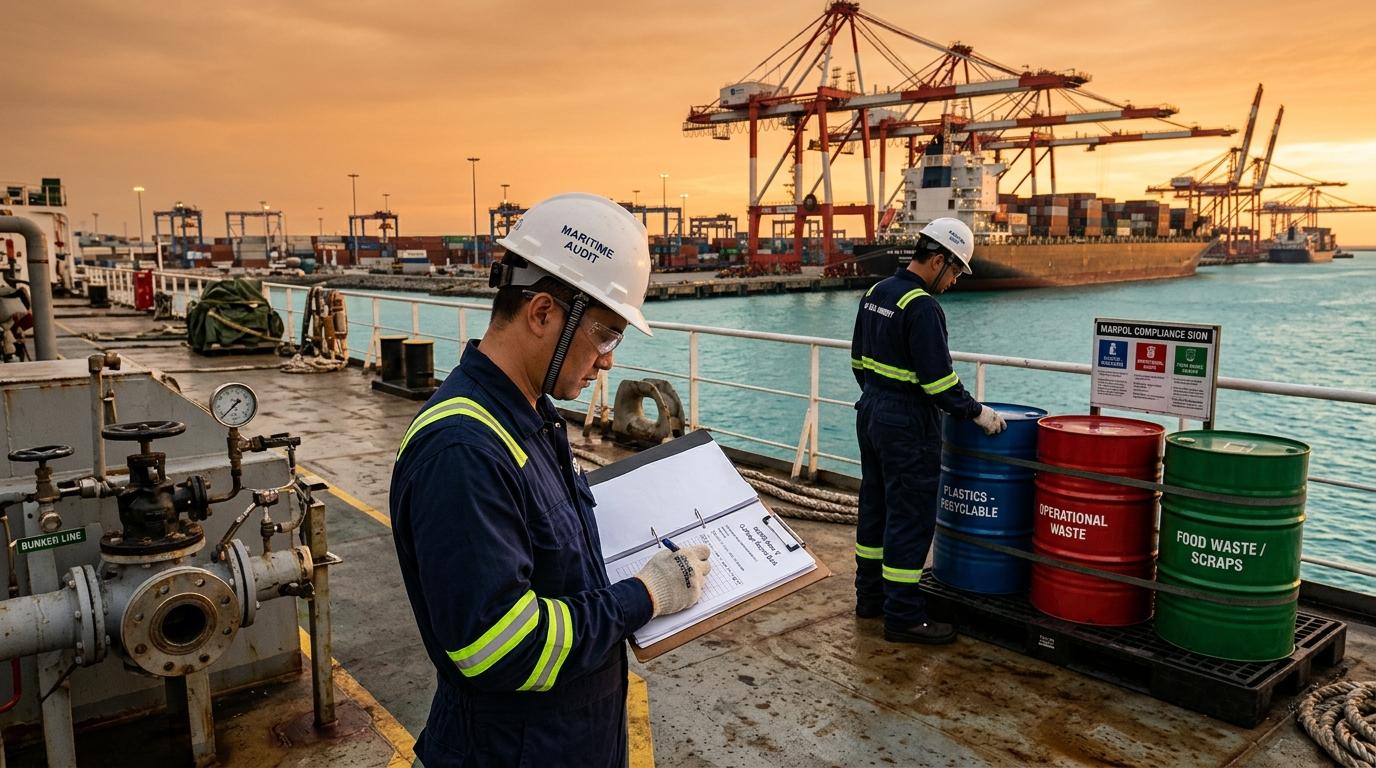
MLC 2006 Regulation 3.2: Food Provision Supply, Cold-Chain Hygiene & Ship Chandler Accountability
A Master Mariner’s breakdown of Maritime Labour Convention (MLC 2006) Regulation 3.2, temperature-controlled reefer logistics, halal/multinational crew nutrition, and Port State Control (PSC) galley inspections.
MLC 2006 Regulation 3.2 Legally Mandates Nutritious, Hygienic, And Culturally Diverse Food & Drinking Water Free Of Charge To Seafarers.
Unbroken HACCP & ISO 22000 Cold-Chain Reefer Transport (-18°C Frozen / +2°C Chilled) Prevents Spoilage During High-Ambient Port Calls.
Weekly Master Inspections And Certified Chandler Traceability Logs Protect Vessels From Port State Control (PSC) Deficiencies.
Understanding MLC 2006 Regulation 3.2 On Food And Catering
Under Regulation 3.2 of the International Labour Organization’s Maritime Labour Convention (MLC 2006), every flag state and shipowner must ensure that seafarers onboard commercial vessels are provided with food and drinking water of appropriate nutritional value, quality, and quantity — taking into account the differing cultural and religious backgrounds of multinational crews.
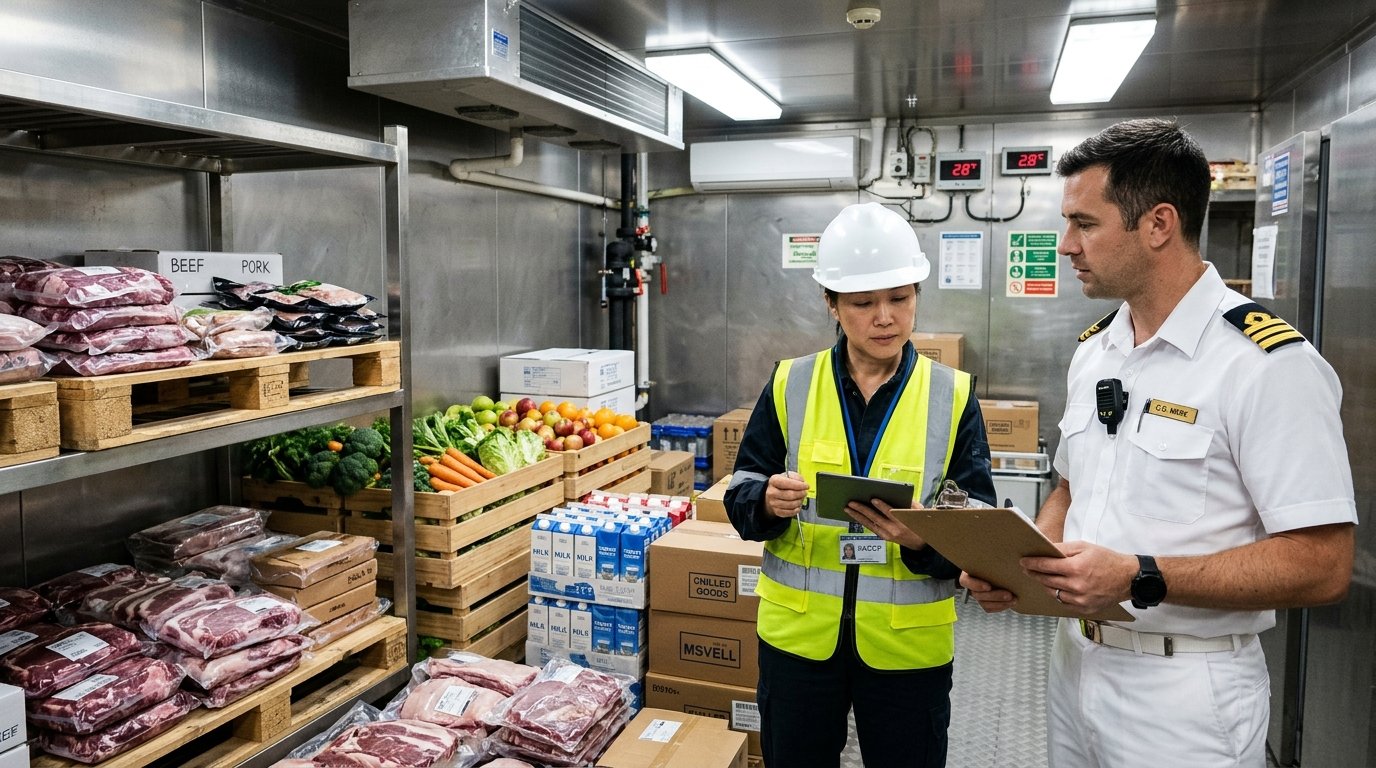
As Master Mariner Capt. Anish Wankhede details, Port State Control (PSC) inspectors routinely audit vessel provision rooms, meat freezers, vegetable chillers, and potable water test certificates. Substandard, expired, or improperly thawed provisions delivered by an unqualified vendor can trigger formal PSC deficiencies or even vessel detention.
Maintaining Unbroken HACCP & ISO 22000 Cold-Chain Integrity At Port
In warm maritime climates such as the Arabian Sea and Indian Ocean, the critical vulnerability in ship victualling occurs during the transit window between the chandler’s cold storage facility and the ship’s provision crane. If frozen meats, poultry, seafood, or dairy products are transported in non-refrigerated open trucks, surface thawing and bacterial proliferation begin within 30 minutes.
An ISO 22000 and HACCP-certified ship chandler eliminates this risk by pre-cooling calibrated reefer trucks (-18°C to -22°C for frozen cargo; +1°C to +4°C for chilled dairy and produce), vacuum-sealing halal-certified meat cuts with batch expiry labels, and coordinating immediate crane hoisting directly into the vessel’s cold rooms.
Best Practices For Chief Cooks & Masters During Gangway Inspection
Upon arrival of the provision truck at berth or supply boat at outer anchorage, the Chief Cook and Duty Officer should verify core product temperatures using a calibrated probe thermometer, inspect packaging for ice-crystal recrystallization (a clear indicator of prior thawing and refreezing), and check veterinary and halal certificates.
Partnering with a long-established chandler that sources farm-fresh seasonal vegetables on the morning of delivery increases shelf life by up to 14 days during long ocean passages.
Need 24/7 IMPA & HACCP Vessel Supply In Pakistan?
Get an itemized quotation within 2–4 hours for Karachi Port (KPT), Port Qasim (PQA), or Gwadar.
More Maritime Industry Articles
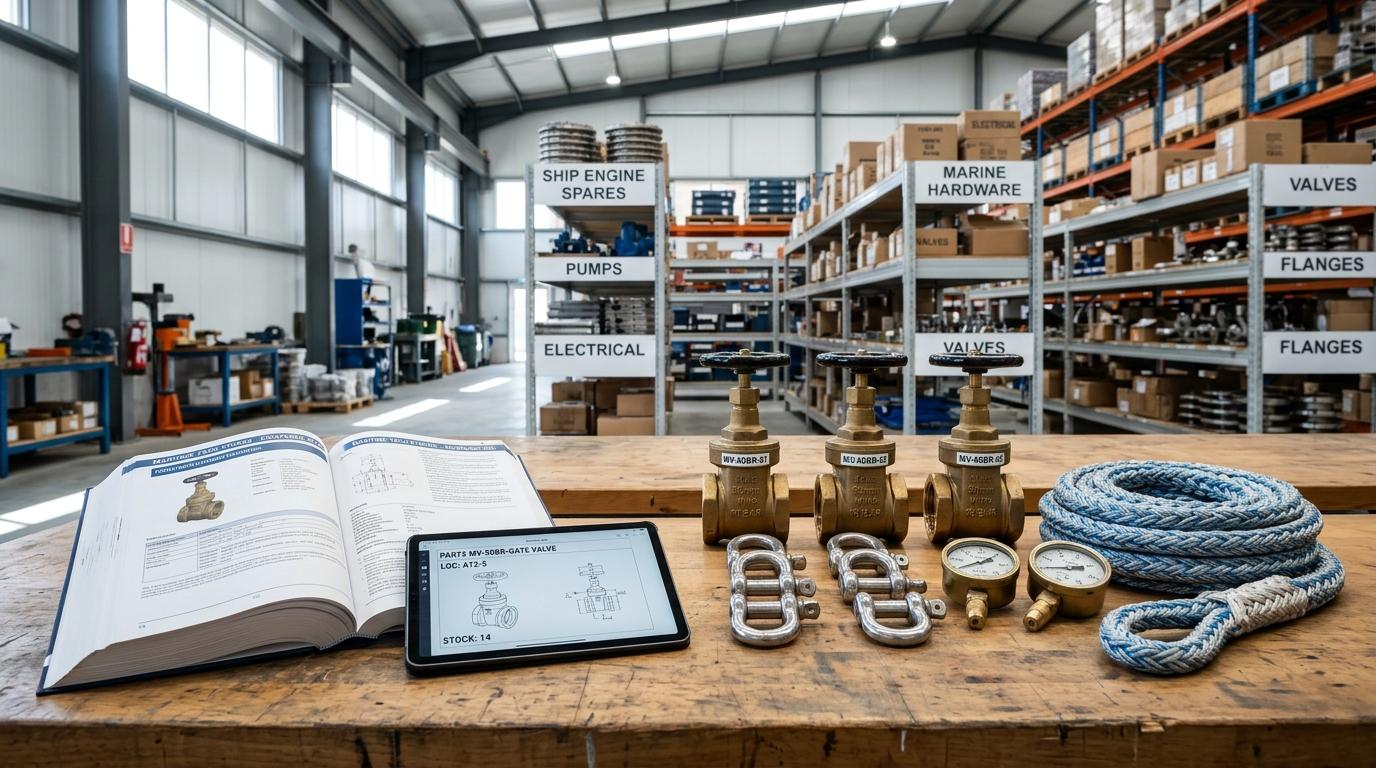
Management And Procurement Of Spares On Ships: How To Identify, Order & Reduce Costs
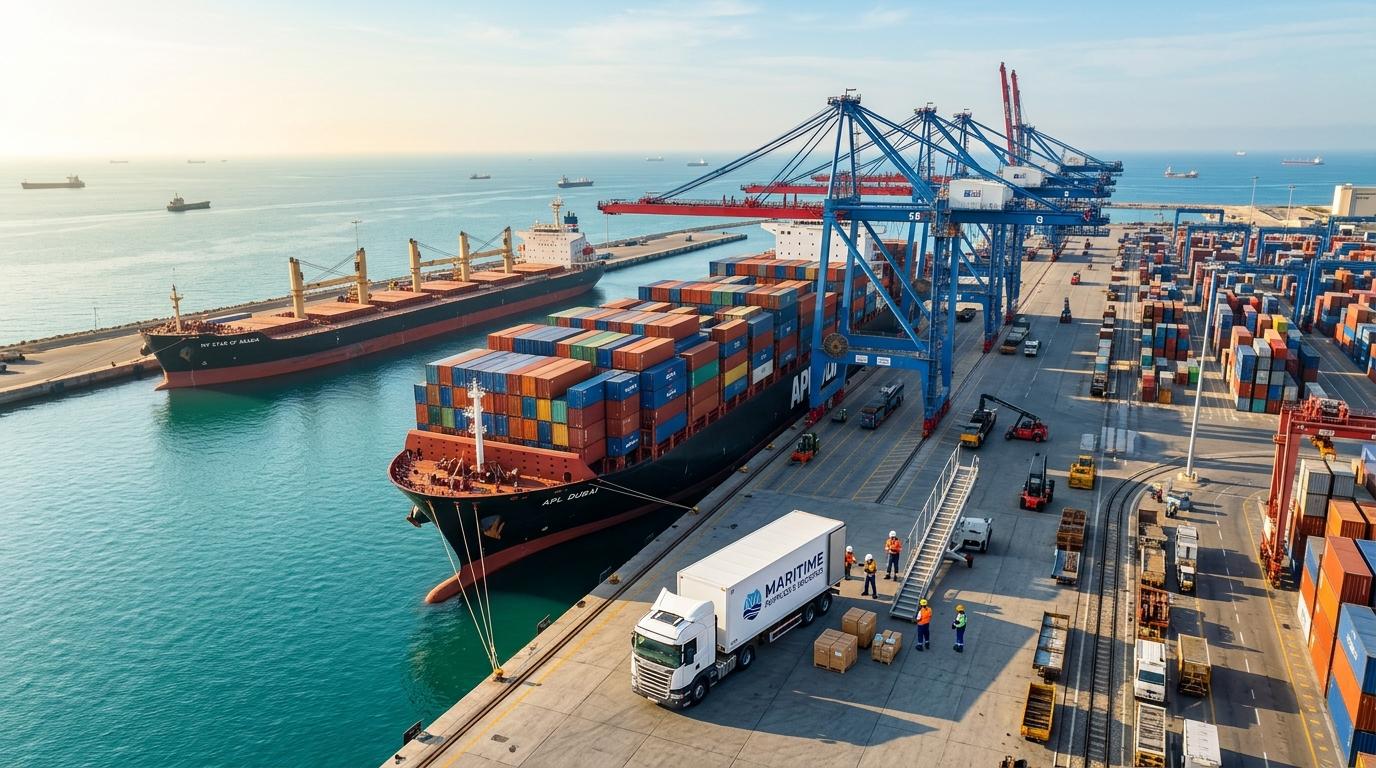
IMPA: How Marine Purchasing Executives & Ship Chandlers Lead The Green Transition